German alphabet, numbers and W- Questions
German alphabet, numbers and W- Questions
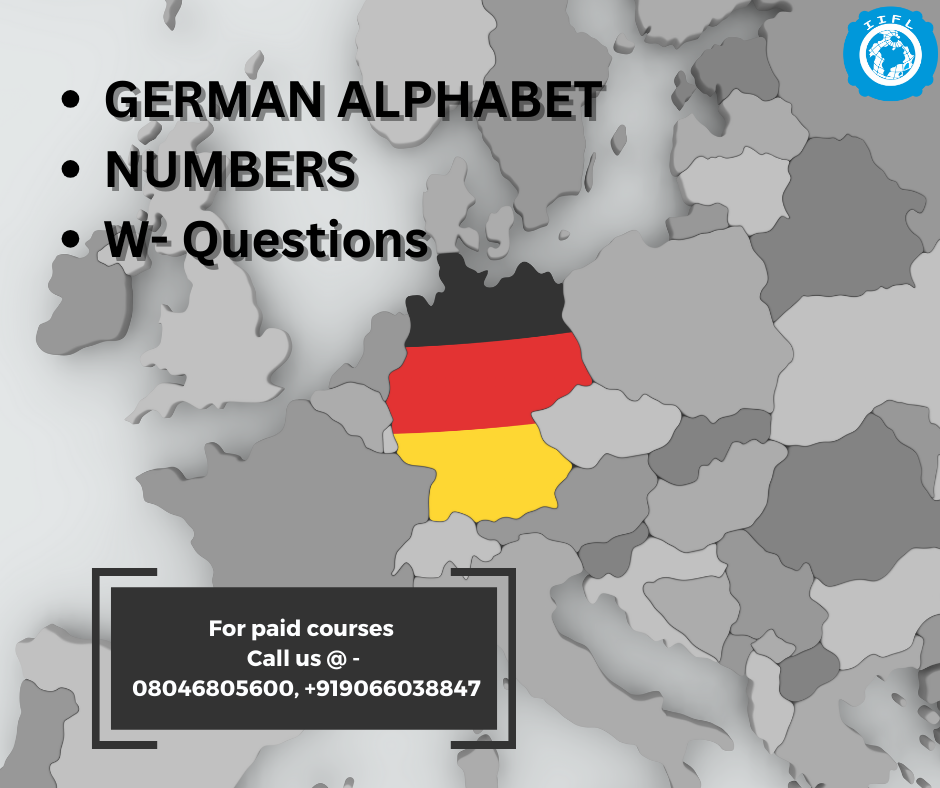
German for beginners | German alphabet | numbers | Introduction | w- questions | Months | seasons | German for beginners:- Topics included- Alphabet - German has 26 letters, 1 special character, 3 vowels
- Numbers - ZAHLEN, learn saying numbers in German!
- Basic introduction - Die vorstellung. Learn the greetings in German.
- W- questions - Questions starting with W
- Names of Months - Die Monaten, Months in German are quite similar to English
- Names of seasons - Die Jahreszeiten
German ALphabet
The German alphabet, known as the "deutsche Alphabet" or "das Alphabet," is based on the Latin script and consists of 26 letters, just like the English alphabet. However, there are four additional letters in the German alphabet, known as "Umlauts," which are modified versions of standard vowels. Here is the German alphabet:- A - pronounced like the "a" in "father"
- B - pronounced like the "b" in "book"
- C - pronounced like the "ts" in "tsunami" (mainly used in loanwords)
- D - pronounced like the "d" in "dog"
- E - pronounced like the "e" in "pen"
- F - pronounced like the "f" in "fish"
- G - pronounced like the "g" in "go"
- H - pronounced like the "h" in "house"
- I - pronounced like the "ee" in "see"
- J - pronounced like the "y" in "yes"
- K - pronounced like the "k" in "kite"
- L - pronounced like the "l" in "lake"
- M - pronounced like the "m" in "moon"
- N - pronounced like the "n" in "noon"
- O - pronounced like the "o" in "go"
- P - pronounced like the "p" in "pen"
- Q - pronounced like the "k" in "kite" (mainly used in loanwords)
- R - pronounced with a guttural "r" sound
- S - pronounced like the "s" in "see"
- T - pronounced like the "t" in "top"
- U - pronounced like the "oo" in "food"
- V - pronounced like the "f" in "fish" (or like "v" in some loanwords)
- W - pronounced like the "v" in "vase" (or like "w" in some loanwords)
- X - pronounced like "ks" or "gs" (mainly used in loanwords)
- Y - pronounced like the "ü" in "über" (mainly used in loanwords)
- Z - pronounced like the "ts" in "tsunami"
- Ä - pronounced like the "a" in "cat," but with lips rounded
- Ö - pronounced like the "i" in "bird," but with lips rounded
- Ü - pronounced like the "u" in "blue," but with lips rounded
- ß - called "Eszett" or "scharfes S," it is a unique German letter that represents the "ss" sound, as in "sharp."
German Numbers
Here are the numbers from 1 to 10 in German:
- Eins - One
- Zwei - Two
- Drei - Three
- Vier - Four
- Fünf - Five
- Sechs - Six
- Sieben - Seven
- Acht - Eight
- Neun - Nine
- Zehn - Ten
- Elf - Eleven
- Zwölf - Twelve
- Dreizehn - Thirteen
- Vierzehn - Fourteen
- Fünfzehn - Fifteen
- Sechzehn - Sixteen
- Siebzehn - Seventeen
- Achtzehn - Eighteen
- Neunzehn - Nineteen
- Zwanzig - Twenty
- 21: Einundzwanzig (One and twenty)
- 32: Zweiunddreißig (Two and thirty)
- 45: Fünfundvierzig (Five and forty)
Related Posts