Japanese Online Classes – Master the Language from Anywhere
Japanese online classes: Unlock the beauty of the Japanese language with top-rated Japanese online classes. Whether you're preparing for the JLPT, planning to study or work in Japan, or simply fascinated by the culture, online learning gives you the flexibility and resources to succeed.
Japanese Online Classes vs. Offline Classes – Which Is Better in 2027?
 As we step into 2025, more learners are asking: Are Japanese classes better than traditional offline ones? The answer depends on your goals, lifestyle, and learning preferences.
Flexibility and Convenience
Japanese online courses offer unmatched flexibility. You can learn anytime, anywhere—perfect for busy professionals and students juggling multiple commitments.
Personalized Learning
Many Japanese online classes provide one-on-one sessions, recorded lessons, and progress tracking tools, making learning more efficient and tailored to individual needs.
Cost-Effectiveness
Compared to offline classes that include travel and material costs, Japanese online language courses are often more budget-friendly without compromising on quality.
Interaction and Immersion
While offline classes allow in-person interaction, modern Japanese online classes bridge this gap with live video lessons, group discussions, and interactive platforms.
Choose Japanese Online Classes
Enrolling in Japanese classes online offers several advantages for learners at all levels:
Flexibility and Convenience
Study from the comfort of your home or on the go. With Japanese courses online, you can choose your own schedule, making it ideal for working professionals and students alike.
Access to Native Instructors
Many Japanese online classes are taught by native speakers who provide authentic language exposure and cultural insights that are essential for mastering Japanese.
Structured Curriculum
Online courses follow a systematic approach, covering grammar, vocabulary, listening, speaking, reading, and writing. Whether you're a beginner or advanced learner, Japanese online courses cater to your level.
Beginners preparing for the first JLPT level can explore the Japanese N5 syllabus to understand the grammar, vocabulary, Kanji and other skills they need to develop.
What to Expect from the Best Japanese Online Classes
Interactive Learning Tools
The best Japanese online courses use multimedia tools, quizzes, flashcards, and live sessions to keep learning engaging and effective.
JLPT Preparation
Know more about JLPT Most learners aim to clear JLPT N5 to N1 levels. Japanese online classes online provide dedicated training, mock tests, and tips to crack these exams with confidence.
One-on-One Coaching
Many platforms offer personalized sessions. With tailored feedback and customized lessons, Japanese classes ensure you make steady progress.
Top 10 Mistakes to Avoid When Taking Japanese Online Classes
Japanese online classes are a great way to learn the language, but many learners make common mistakes that slow their progress. Here are the top 10 to avoid:
Skipping the Basics
Jumping ahead without mastering Hiragana and Katakana is a common error in Japanese language online classes.
2. Not Setting Clear Goals
Without specific goals, it's easy to lose motivation. Set a target JLPT level or conversation skill.
3. Ignoring Speaking Practice
Many learners focus only on reading or listening. Good Japanese classes include speaking drills—don’t skip them.
4. Relying Only on Passive Learning
Watching lessons isn't enough. Active practice is key in Japanese classes.
5. Inconsistent Study Schedule
Irregular learning leads to poor retention. Stick to a routine to make the most of Japanese online classes.
6. Not Reviewing Regularly
Repetition is crucial in language learning. Use spaced repetition tools included in most Japanese language online courses.
7. Avoiding Native Interaction
Engaging with native speakers boosts fluency. Choose Japanese language online classes that offer live sessions or language exchange.
8. Fearing Mistakes
Don’t hold back during practice. Japanese online language classes are a safe space to make errors and learn from them.
9. Skipping Cultural Context
Language and culture go hand-in-hand. Great Japanese online courses integrate cultural tips too.
10. Not Asking Questions
Always clarify doubts. Take full advantage of tutor support in your Japanese online courses.
Final Tip Avoid these mistakes and stay consistent—Japanese online classes can help you reach fluency faster than you think!
Who Should Enroll in Japanese Online Classes?
Students Planning to Study in Japan
Japanese universities often require language proficiency. Japanese online language courses help you meet these requirements efficiently.
Professionals Working with Japanese Clients
For those in business or tech industries, Japanese online classes can enhance your communication skills and open doors to international opportunities.
Anime and Manga Enthusiasts
If you're into Japanese pop culture, Japanese online language classes help you enjoy your favorite anime and manga in their original language.
If you are starting from home, explore our complete guide to learn Japanese online and discover structured ways to develop speaking, grammar, vocabulary, reading and writing skills.
How to Choose the Right Japanese Online courses
Check the Course Structure
Ensure that the course covers all language skills and offers JLPT-focused content.
Read Reviews and Testimonials
Look for platforms with high ratings and positive feedback about their Japanese language online classes.
Compare Pricing and Packages
Quality education doesn't have to break the bank. Many affordable Japanese online language classes offer excellent value.
How Japanese Online language Classes Help You Get a Job in Japan
Planning to work in Japan?
Mastering the language is your first step, and Japanese online course make it easier than ever.
Language Proficiency for Job Readiness
Most Japanese companies require at least JLPT N3 or higher. Japanese online classes offer structured JLPT preparation, helping you build the skills employers are looking for.
Cultural Understanding
Beyond language, Japanese language online classes also teach business etiquette, formal communication, and workplace culture—crucial for thriving in a Japanese work environment.
Learn at Your Own Pace
With the flexibility of Japanese online language courses, you can balance learning with your current job or studies, making it easy to prepare for opportunities in Japan.
Interview Preparation
Many platforms include mock interviews and resume writing sessions tailored for Japanese employers, giving you a competitive edge.
Start Your Journey with Japanese Online Classes Today
Learning Japanese has never been easier. With access to expert tutors, comprehensive materials, and a flexible schedule, Japanese online course empower you to achieve your language goals at your own pace. Learn Japanese online
Japanese Online Classes – Complete Guide to Learning Japanese Online
Learning Japanese can open opportunities for higher education, travel, cultural exploration and careers connected with Japan. However, Japanese differs significantly from English and many Indian languages in its writing systems, grammar, sentence structure and levels of formality. Following a structured learning path can therefore make a major difference.
Japanese online classes provide learners with the flexibility to study Japanese from home while receiving structured instruction in grammar, vocabulary, speaking, listening, reading and writing. Whether you are a complete beginner, a working professional or preparing for the JLPT, choosing the right Japanese online course can help you build your skills systematically.
Students who want to learn Japanese online can now combine live classes with digital learning resources, speaking activities and independent practice. A structured Japanese language course online can be especially useful for learners who need regular guidance without travelling to a physical classroom.
Why Are Japanese Online Classes Becoming Popular?
Online learning has made Japanese language education more accessible to students outside major cities. Instead of limiting yourself to institutes within travelling distance, Japanese language classes online allow you to study with instructors from virtually anywhere.
For working professionals and university students, Japanese online classes can also make scheduling easier. Learners can attend lessons without spending additional time commuting and can supplement their classes with digital resources throughout the week.
A good Japanese learning course should nevertheless provide more than convenience. Look for structured progression, teacher interaction, speaking opportunities, assignments and regular feedback.
Who Should Take Japanese Online Classes?
Japanese online classes can be suitable for:
- complete beginners learning Japanese for the first time
- students preparing for JLPT examinations
- professionals working with Japanese organisations
- people planning to study or work in Japan
- anime and Japanese-culture enthusiasts who want deeper language knowledge
- travellers interested in communicating in Japanese
- learners progressing toward advanced Japanese
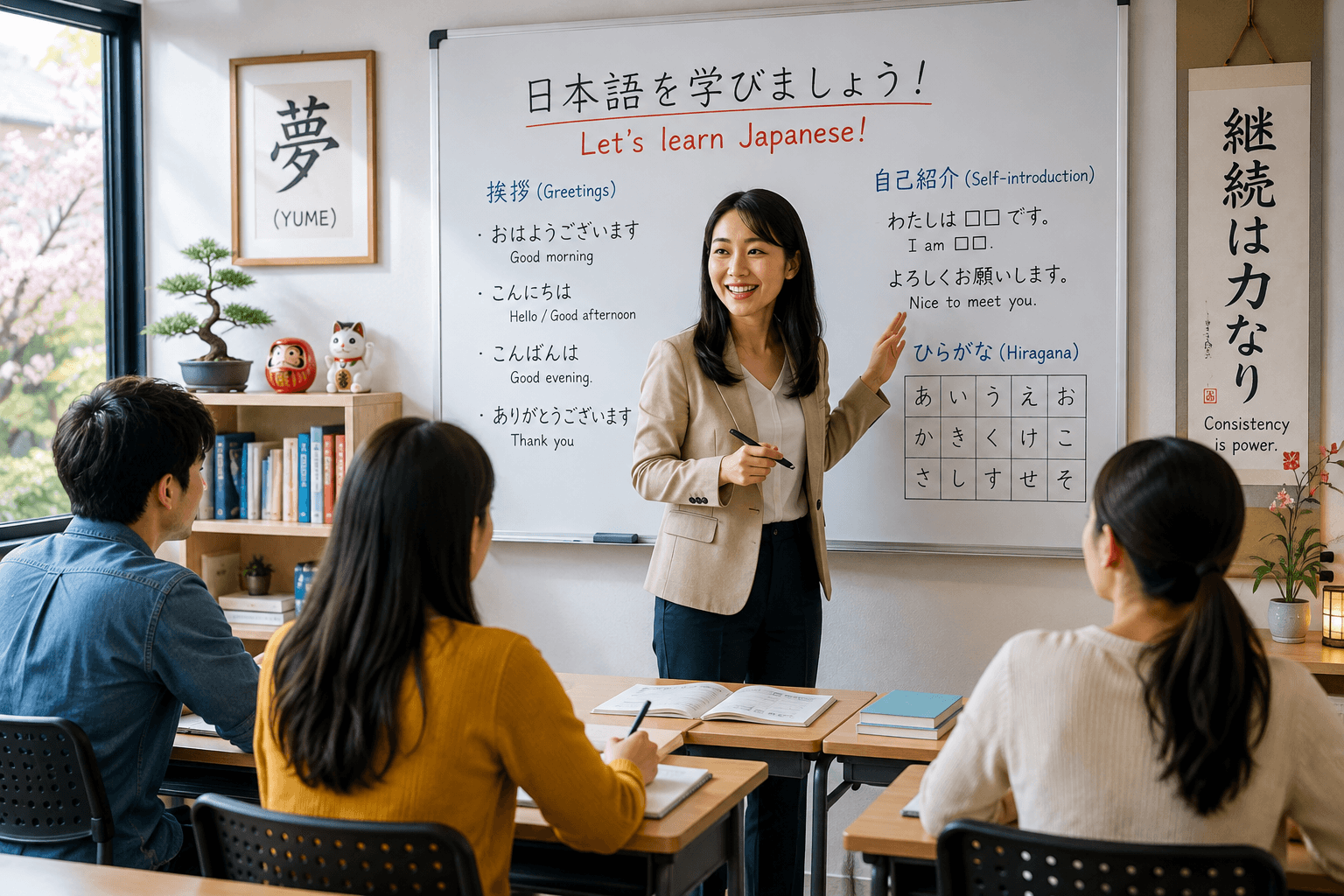
For complete beginners, Japanese online classes for beginners should start with pronunciation, Hiragana, Katakana, basic vocabulary and simple sentence structures before introducing more complicated grammar and Kanji.
Japanese Grammar Explained for Complete Beginners
Japanese grammar can initially feel unfamiliar because its sentence structure differs from English.
A basic Japanese sentence often places the verb toward the end. Particles such as wa (は), ga (が), o (を) and ni (に) indicate how different elements function within a sentence.
Students beginning a Japanese course for beginners should concentrate on understanding simple sentence patterns rather than trying to memorise advanced grammatical terminology.
For example:
Watashi wa gakusei desu.
I am a student.
Watashi wa Nihongo o benkyō shimasu.
I study Japanese.
A structured Japanese language course online can gradually introduce these patterns and provide exercises that help students use them in conversation.
Common Mistakes Beginners Make Learning Japanese Online
One common mistake is trying to learn too much Kanji before developing a foundation in Hiragana and Katakana.
Another is spending most study time reading grammar explanations without actually speaking or listening to Japanese.
Students taking Japanese online classes should balance:
Grammar + Vocabulary + Speaking + Listening + Reading + Writing
Learners should also avoid constantly switching between apps, textbooks and courses. A structured Japanese learning program combined with a few supplementary resources is usually easier to follow than using many unrelated learning materials.
Regular practice matters more than collecting learning resources.
How to Learn Japanese Online Effectively
Students who want to learn Japanese online should create a routine that combines formal lessons with independent practice.
For example, attend your scheduled Japanese language classes online, revise vocabulary on another day, practise Kanji separately and spend a few minutes listening to Japanese every day.
Speaking is particularly important. A Japanese conversation class online or conversation component within your regular course can help you transform passive vocabulary into language you can actually use.
If speaking is your priority, look for a Japanese speaking course online that provides substantial interaction rather than relying entirely on recorded lessons.
Japanese Lessons Online for Speaking Practice
Speaking Japanese requires more than knowing vocabulary.
Students need practice forming sentences quickly, responding to questions and understanding how expressions change according to the situation.
Interactive Japanese lessons online can include:
- introductions
- asking and answering questions
- shopping conversations
- restaurant situations
- travel communication
- workplace conversations
- discussing hobbies
- talking about daily activities
Regular Japanese language lessons online can help learners develop communication skills while receiving corrections from an instructor.
Japanese Writing Systems: Hiragana, Katakana and Kanji
Japanese uses three major writing systems: Hiragana, Katakana and Kanji.
Beginners generally start by becoming comfortable with Hiragana and Katakana before gradually expanding their Kanji knowledge.
Students who learn to read Japanese online should avoid treating characters only as visual symbols. Connect characters with pronunciation, vocabulary and sentences.
Reading practice within a structured Japanese online course can gradually progress from simple words and sentences toward more complex material.
Japanese Vocabulary Development
Vocabulary should be learned in context rather than only through isolated word lists.
A beginner may start with words connected with:
- numbers
- family
- food
- transportation
- occupations
- school
- shopping
- time and dates
- hobbies
- everyday activities
Students can learn Japanese vocabulary online using flashcards and digital tools, but new vocabulary should eventually be used in conversations and sentences.
A good Japanese language course online should repeatedly expose students to previously learned vocabulary so that words move from short-term recognition to practical use.
What Is the Best Time to Take Japanese Online Classes?
There is no universally perfect time.
Morning classes may suit people who concentrate better before work or university. Evening Japanese online classes may work better for professionals, while weekend lessons can help learners with demanding weekday schedules.
Some learners specifically search for Japanese Zoom classes because they want live interactive lessons. Whether the course uses Zoom or another platform matters less than the quality of teaching and interaction.
Choose a schedule that you can maintain consistently.
Combining Multiple Methods to Learn Japanese Faster
No single method develops every language skill equally well.
A balanced approach can combine:
Japanese online classes + vocabulary revision + listening + conversation + reading + writing
Use your Japanese online course to provide structure. Use flashcards to reinforce vocabulary. Listen to Japanese regularly. Read material appropriate to your current level and participate actively during speaking exercises.
Students looking for the best online course to learn Japanese should therefore evaluate the entire learning experience rather than choosing a programme based on one feature.
Free Japanese Resources vs Paid Japanese Online Classes
There are many ways to learn Japanese online free, and free materials can be valuable for additional practice.
Students can find vocabulary exercises, listening materials, videos, reading resources and other forms of Japanese language learning free online.
However, searching for Japanese classes online free or a Japanese online course free does not necessarily provide the same experience as instructor-led learning.
Free resources generally work best as supplements when you need additional exposure and practice.
A paid Japanese online course can provide structured progression, scheduled lessons, teacher feedback and speaking opportunities.
The best choice depends on your goals, budget and learning style.
Can You Learn Japanese Online for Free?
Yes, it is possible to begin learning through free resources.
People searching for learn Japanese online free, Japanese lessons online free, free Japanese course, Japanese lessons free or Japanese language course free can find many useful supplementary resources.
However, free learning requires greater self-discipline because you must decide what to study and how to measure your progress.
If your goal is JLPT preparation, professional communication or structured progression, combining free resources with instructor-led Japanese online classes can provide greater direction.
Online vs In-Person Japanese Classes
Both formats can work well.
Japanese language classes online provide flexibility, eliminate commuting and allow students to study regardless of location. This makes them particularly useful for professionals and university students.
Traditional classroom lessons provide face-to-face interaction and may appeal to learners who prefer physical classroom environments.
When comparing the two, evaluate:
- instructor quality
- curriculum
- class size
- speaking opportunities
- feedback
- scheduling
- learning materials
The best format is ultimately the one you can attend consistently and participate in actively.
Cultural Immersion While Learning Japanese Remotely
You do not have to live in Japan to begin experiencing Japanese language and culture.
Students taking Japanese online classes can watch Japanese interviews, listen to podcasts and music, read simple Japanese material and learn about festivals, food, etiquette and everyday social behaviour.
You can also participate in language exchanges and cultural communities.
This type of exposure complements a formal Japanese learning course because it demonstrates how language is actually used in different social contexts.
Japanese Dialects: Which One Should You Learn First?
Beginners should generally focus on standard Japanese rather than trying to master several regional varieties simultaneously.
Regional dialects can be fascinating and useful later, particularly if you intend to live in a particular region of Japan.
However, students beginning Japanese language classes online should establish a strong foundation in standard Japanese before concentrating heavily on regional differences.
JLPT and Japanese Online Learning
Many students choose a Japanese online course because they eventually want to take the Japanese-Language Proficiency Test (JLPT).
The JLPT has levels ranging from N5 to N1, with N5 representing the introductory end of the examination scale and N1 representing advanced proficiency.
Beginners may therefore look for a Japanese N5 online course or Japanese N5 course online as their first structured examination pathway.
However, examination preparation should not completely replace communication practice. Students should develop listening, vocabulary, grammar, reading and practical communication alongside test preparation.
Can Non-Native Speakers Reach Advanced Japanese?
Yes. Reaching advanced proficiency depends on sustained learning and exposure rather than nationality.
A learner may start with Japanese online classes for beginners, progress through intermediate study and eventually move toward advanced Japanese lessons online or an advanced Japanese online course.
The journey requires patience.
Instead of focusing immediately on N1 or fluency, concentrate on reaching the next achievable stage.
Intensive Japanese Courses Online
Some students prefer an intensive Japanese course online because they have a specific deadline, such as moving to Japan, starting university or preparing for an examination.
An intensive programme can increase weekly exposure, but more class hours do not automatically guarantee faster progress.
Students need sufficient time for revision and practice.
Before choosing a Japanese intensive course, consider whether your work or study schedule allows you to maintain the required pace.
Wondering how much time you need to reach different proficiency levels? Read our guide on how long it takes to learn Japanese and understand the factors that influence your learning progress.
Japanese Online Classes for Careers and Working With Japanese Companies
Japanese can become especially valuable when combined with professional expertise.
Engineers, IT professionals, researchers, business professionals and specialists working with Japanese companies may benefit from developing Japanese communication skills.
A business Japanese online course may eventually be appropriate for learners who already possess a solid general Japanese foundation and need workplace-specific communication.
How Companies Evaluate Japanese Language Proficiency
Employers may consider JLPT qualifications, but practical communication can also matter.
Depending on the job, employers may evaluate whether you can:
- understand instructions
- communicate with colleagues
- participate in meetings
- write workplace messages
- interact with customers
- use appropriate levels of formality
Students taking Japanese online classes for career development should therefore combine certification preparation with practical communication.
Industry-Specific Japanese Vocabulary
Once you develop general Japanese, begin learning vocabulary relevant to your profession.
An IT professional may need words related to software, systems, testing and technical support. Manufacturing professionals may need vocabulary involving production, equipment, quality and safety.
Hospitality professionals require language connected with reservations, customers, payments and directions.
A general Japanese language course online creates the foundation, while industry-specific learning makes your Japanese more professionally relevant.
Japanese Company Culture and Language Expectations
Working with Japanese companies requires more than translating English sentences into Japanese.
Professional communication can involve politeness, workplace hierarchy, greetings, punctuality and situational language.
Advanced learners may eventually study keigo, the honorific language used in formal and professional situations.
Good Japanese online classes can introduce cultural context gradually so learners understand not only what expressions mean but also when they are appropriate.
Company Sponsorship Programs for Language Learners
Some employers support language education when it contributes directly to an employee's professional responsibilities.
Support may include internal training, reimbursement, external courses or professional-development budgets.
If your work involves Japanese customers, suppliers or colleagues, ask whether your organisation provides financial support for a Japanese language course online.
When requesting sponsorship, explain how improved Japanese could contribute to specific business responsibilities.
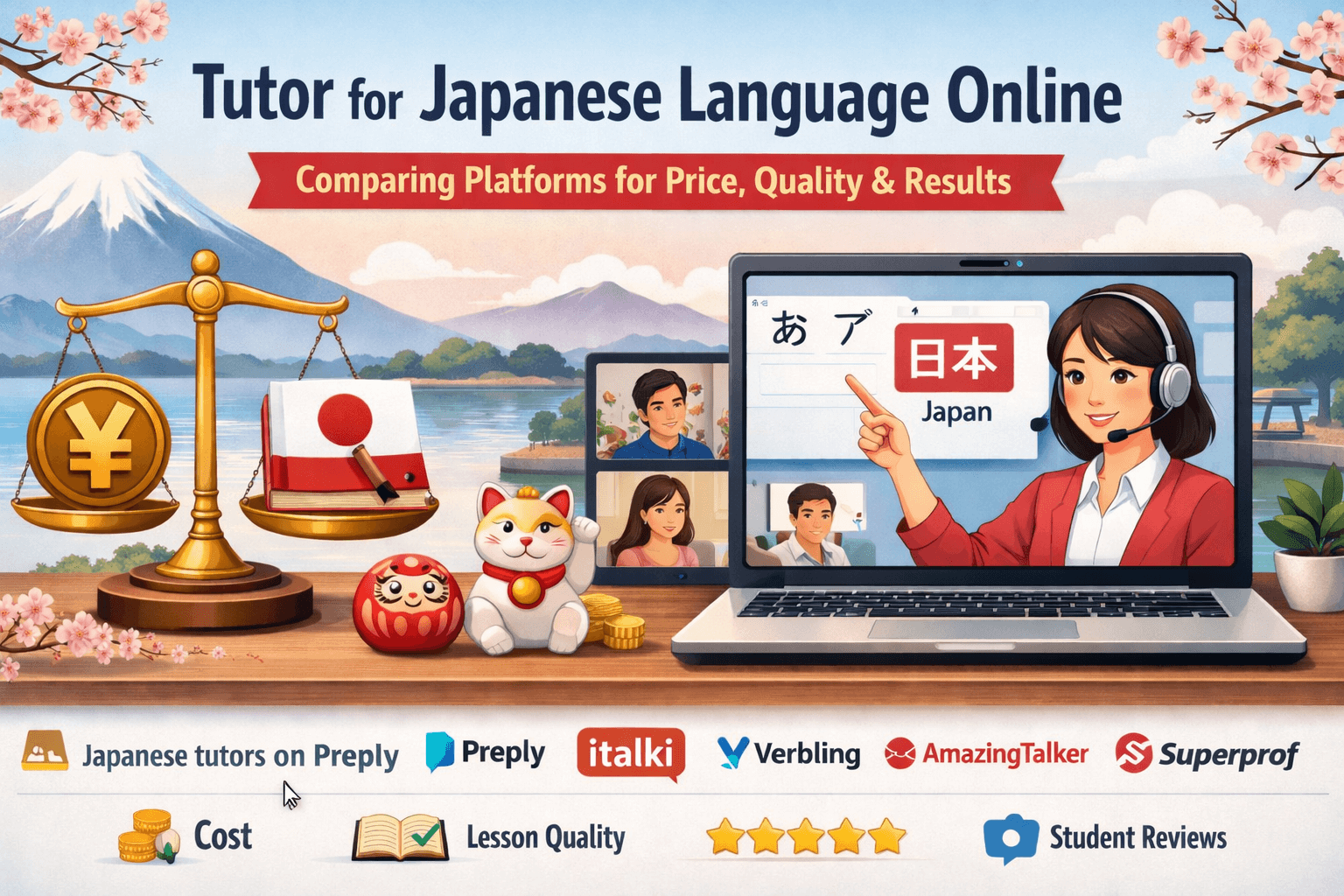
If you prefer personalized guidance, compare the best online Japanese tutoring platforms based on teaching quality, learning structure, pricing and results.
Mentorship and Recruiting Programs
Language learning can be combined with professional development.
Students interested in Japan-related careers can explore employer programmes, university career services, professional organisations, internships and mentorship opportunities.
Continue building your professional network while attending Japanese online classes instead of waiting until you reach advanced proficiency.
A mentor with experience working with Japanese organisations can provide practical career insights that language textbooks alone cannot provide.
Networking Events for Japanese Language Learners
Cultural organisations, universities, business associations, language exchanges and professional groups may organise events involving Japan and Japanese language learning.
Networking should not simply mean asking people for jobs.
Use these opportunities to practise communication, understand different industries, meet experienced professionals and learn more about Japanese workplace culture.
Online communities can also complement Japanese language classes online by providing additional opportunities for authentic communication.
Studying and Living in Japan
Some learners eventually decide to move from Japanese online classes to language study in Japan.
Before doing so, evaluate tuition, immigration requirements, accommodation, transportation, food and other living expenses.
Visa Requirements for Language School Students
Students planning to attend a language school in Japan may need an appropriate immigration status depending on their circumstances and programme.
Requirements can change and may differ according to nationality and course duration.
Always verify current information with official Japanese immigration authorities and your chosen institution.
Taking a Japanese language course online before travelling can nevertheless provide a useful foundation for managing everyday life after arriving in Japan.
Part-Time Job Opportunities While Studying
Some international students consider part-time work while studying in Japan.
The ability to work depends on immigration status and applicable permissions, so students should verify the current rules before accepting employment.
Japanese proficiency can also influence which jobs are realistically available.
Students who begin to learn Japanese language online before moving may find everyday communication easier when they arrive.
Housing Costs While Studying in Japan
Housing costs vary significantly depending on the city, neighbourhood and accommodation type.
Tokyo, for example, can have very different housing costs from smaller Japanese cities.
Students should research:
- monthly rent
- initial housing expenses
- utilities
- transportation
- food
- tuition
- insurance and other living expenses
Do not plan your entire study budget around a single national average.
Can Learning Japanese Help You Change Careers?
Japanese alone does not automatically create a new career.
However, combining Japanese with existing expertise can strengthen your professional profile.
An IT professional who takes Japanese online classes may eventually pursue roles involving Japanese clients or teams. Manufacturing professionals may find Japanese useful when working with Japanese companies, while tourism and international-business professionals can use the language in different contexts.
Think of Japanese as a skill that complements your existing education and experience.
How to Make Japanese Language Education More Affordable
You do not need every paid learning resource available.
Choose one structured Japanese online course and supplement it with carefully selected free resources.
People searching for learn Japanese free, learn Japanese online course free, Japanese language course online free, Japanese online classes for free, or Japanese language learning online free can use these materials for additional vocabulary, listening and reading practice.
However, do not add dozens of resources simply because they are free.
A smaller combination of high-quality resources used consistently is generally more effective.
Choosing the Best Japanese Online Course
The best course to learn Japanese depends on your goals.
A complete beginner has different requirements from someone preparing for JLPT N2 or learning Japanese for business.
Before choosing the best online course for Japanese, evaluate:
- course level
- teacher qualifications
- class size
- live interaction
- speaking practice
- curriculum
- assessments
- learning materials
- JLPT preparation
- schedule flexibility
Instead of searching endlessly for the best programs for learning Japanese, choose a programme that provides a clear progression and matches your learning objective.
What Makes a Good Japanese Learning Platform?
A useful Japanese learning platform should make it easy to access lessons, assignments and learning materials while supporting interaction between students and instructors.
Technology itself does not determine educational quality.
Whether you use a dedicated platform, Japanese Zoom classes, or another live-learning system, the quality of teaching, feedback and course structure remains more important than the software.
How to Get the Most From Japanese Online Classes
Attending lessons alone will not make you proficient.
Students taking Japanese online classes should revise regularly, practise speaking, listen to Japanese outside class and actively use newly learned vocabulary.
If you want to learn Japanese online, create a realistic weekly routine.
For example:
Class → Review → Vocabulary → Listening → Speaking → Reading → Revision
Following this cycle consistently can help reinforce what you learn.
Final Thoughts: Learn Japanese Online With a Structured Approach
Japanese online classes provide a flexible way for students and professionals to develop Japanese without depending on physical classroom attendance.
A structured Japanese online course can help you develop grammar, vocabulary, speaking, listening, reading and writing systematically. Students who prefer interactive learning can choose Japanese language classes online with live instructor support, while free digital resources can provide additional independent practice.
Whether your goal is JLPT preparation, higher education, travel, career development or personal interest, the most important factor is consistency.
If you want to learn Japanese online, combine structured teaching with daily exposure and practical communication. A good Japanese language course online should provide the foundation, while listening, speaking, reading and cultural exposure help turn classroom knowledge into practical language ability.
Rather than searching continuously for a perfect method, choose suitable Japanese online classes, follow a structured learning path and gradually progress from beginner Japanese toward higher levels of proficiency.
Frequently Asked Questions
1. How long does it actually take to learn Japanese?
There is no single timeline because progress depends on your learning goals, study frequency and how much Japanese you use outside class. A learner studying a few hours each week will progress differently from someone studying intensively every day. Japanese online classes can provide a structured learning path, while regular vocabulary, listening, reading and speaking practice helps reinforce what you learn. If you want to learn Japanese online, consistency is more important than trying to progress too quickly.
2. Is Japanese difficult for a complete beginner?
Japanese can initially feel challenging because learners need to become familiar with Hiragana, Katakana, Kanji and a sentence structure that differs from English. However, beginners do not need to learn everything simultaneously. Japanese online classes for beginners normally introduce these elements gradually. A structured Japanese learning course can make the language considerably easier to approach.
3. Should I learn Hiragana or Katakana first?
Most beginners start with Hiragana and then learn Katakana. Both are fundamental writing systems and should ideally be learned relatively early. A Japanese language course online can introduce the characters systematically while helping you connect them with vocabulary, pronunciation and sentences rather than memorising them only as symbols.
4. When should I start learning Kanji?
You do not need to master Hiragana and Katakana perfectly before seeing your first Kanji, but developing reasonable familiarity with the two kana systems makes Kanji study easier. Good Japanese language classes online introduce Kanji progressively alongside vocabulary and reading exercises instead of asking beginners to memorise large numbers of characters immediately.
5. Can I really learn Japanese online?
Yes. Students can learn Japanese online through live lessons, structured courses and supplementary digital resources. Effective Japanese online classes should include grammar, vocabulary, listening, reading, speaking and instructor feedback. Online learning works particularly well when students actively participate rather than simply watching lessons.
6. Can I learn Japanese without attending a physical classroom?
Yes. A well-structured Japanese online course can provide many of the elements available in classroom learning, including live instruction, assignments, conversation practice and feedback. Japanese lessons online can be particularly convenient for working professionals and students who cannot regularly travel to a language institute.
7. Are online Japanese classes as effective as in-person classes?
Both formats can be effective. The quality of the instructor, curriculum, interaction and your consistency usually matter more than whether the class is physical or online. Japanese language classes online provide additional flexibility and eliminate commuting, while in-person classes may suit learners who prefer physical classroom interaction.
8. Can I learn Japanese completely through self-study?
Some learners make substantial progress independently, but self-study requires discipline and a clear learning plan. Free videos, textbooks and apps can teach a lot, but speaking correction and personalised feedback may be limited. Combining independent practice with a structured Japanese online course or Japanese language lessons online can provide a more balanced learning experience.
9. Where can I learn Japanese for free?
There are many digital resources available for people who want to learn Japanese online free, including vocabulary tools, listening resources, educational videos and reading materials. A free Japanese course can be useful for exploring the language before committing to formal lessons. However, learners who need structured progression and instructor feedback may eventually benefit from guided classes.
10. Are free Japanese courses enough to become fluent?
Free resources can make a meaningful contribution to learning, but using Japanese lessons online free does not automatically provide a complete learning programme. Learners often need a combination of grammar, vocabulary, listening, reading, writing and speaking practice. Japanese classes online free can therefore work well as supplementary resources alongside structured learning.
11. How many hours a week should I study Japanese?
The ideal amount depends on your objective and available time. Regular study throughout the week is usually more sustainable than studying for several hours on one day and doing nothing for the rest of the week. Students taking Japanese online classes can combine scheduled lessons with short daily sessions for vocabulary, Kanji, listening and reading.
12. Can I learn Japanese while working full-time?
Yes. Many professionals successfully study languages alongside full-time employment. Japanese online classes can make this easier because they eliminate commuting and may provide more flexible schedules. If you want to learn Japanese online while working, create a realistic routine that you can maintain for months rather than an intensive schedule that you abandon after a few weeks.
13. What is the fastest practical way to improve my Japanese?
Combine structured learning with daily exposure. Use a Japanese learning course for progression, practise vocabulary independently, listen to Japanese regularly and speak whenever possible. Students who learn Japanese online should avoid spending all their time studying grammar without actually using the language.
14. How can I improve my Japanese speaking skills?
Speaking improves through regular use. Practise introductions, everyday conversations, asking questions, describing activities and responding without translating every sentence in your head. A Japanese conversation class online or Japanese speaking course online can provide structured opportunities to speak and receive corrections.
15. How can I improve my Japanese listening skills?
Start with audio appropriate to your current ability and gradually expose yourself to more natural Japanese. Listen once for the overall meaning and again for specific words and expressions. Japanese language lessons online can provide structured listening practice, while podcasts, videos and other Japanese media can increase your exposure outside class.
16. How can I remember Japanese vocabulary more easily?
Learn words in sentences and situations rather than memorising isolated translations. Flashcards can help with revision, but try to use new vocabulary while speaking, reading and writing. Students can learn Japanese vocabulary online using digital tools and then reinforce those words during their regular lessons.
17. What is the best way to learn Japanese grammar?
Start with common sentence structures and understand how particles, verbs and adjectives function in practical communication. A structured Japanese language course online can introduce grammar progressively. Instead of memorising every rule, create your own sentences and use new structures during conversation.
18. Do I need to learn Japanese culture along with the language?
Cultural knowledge can significantly improve your understanding of communication. Japanese expressions can change depending on formality, relationships and social situations. Good Japanese online classes can introduce cultural context alongside grammar and vocabulary, helping learners understand not only what an expression means but also when it is appropriate.
19. Which Japanese dialect should I learn first?
Beginners should generally concentrate on standard Japanese because it is widely understood and commonly used in education and national media. Regional dialects can be explored later. Most Japanese language classes online therefore begin with standard Japanese and establish a general communication foundation.
20. When should I start preparing for the JLPT?
You can begin JLPT-oriented preparation once you understand which level matches your current ability. Beginners commonly start by developing the skills associated with N5. A Japanese N5 online course or Japanese N5 course online can provide structured preparation, but students should continue developing practical communication skills alongside examination study.
21. Do I need JLPT certification if I only want to speak Japanese?
Not necessarily. If your main objective is travel, conversation or personal interest, practical communication may matter more than obtaining a certificate. A Japanese online course can be used to develop language ability even if you have no immediate examination plans. Certification becomes more relevant when a university, employer or other organisation asks for evidence of proficiency.
22. How do I choose the right Japanese course?
Look at your current level, learning objective, instructor quality, class size, curriculum, speaking opportunities, schedule and feedback system. The best course to learn Japanese is not necessarily the most expensive or intensive programme. The best online course for Japanese is one that matches your level and provides a learning structure you can follow consistently.
23. Is an intensive course better than regular classes?
An intensive Japanese course online can be useful when you have a specific deadline or enough time to study frequently. However, an intensive schedule also requires substantial revision outside class. A regular Japanese online course may be more sustainable for working professionals and university students. Choose according to the time you can realistically dedicate to learning.
24. Should I study Japanese before moving to Japan?
Yes, developing basic Japanese before arriving can make everyday activities such as transportation, shopping, accommodation and social interaction easier. Starting with Japanese online classes allows you to build a foundation before travelling. You can then continue improving your Japanese through everyday exposure after arriving in Japan.
25. Can I work part-time while studying in Japan?
This depends on your immigration status and the permissions applicable to you. Language ability can also influence the types of jobs you can realistically perform. Studying through a Japanese language course online before moving to Japan can help develop everyday communication, but students should verify current employment and immigration rules through official Japanese authorities.
26. How much does it cost to study Japanese?
The cost varies significantly according to how you learn. Free resources may cost nothing, group Japanese online classes are generally structured around course fees, private tutoring usually costs more, and studying at a language school in Japan involves tuition plus accommodation and living expenses. Compare the complete learning experience rather than course price alone.
27. Do I need advanced Japanese to get a job in Japan?
Not every job has the same language requirement. Some international organisations may operate partly in English, while customer-facing and Japanese-speaking positions can require considerably stronger proficiency. Professionals can begin with general Japanese online classes and later consider a business Japanese online course when workplace communication becomes their priority.
28. Is learning business Japanese different from everyday Japanese?
Yes. Workplace Japanese can involve formal vocabulary, professional expressions, business etiquette and different levels of politeness. Beginners should normally establish general Japanese first. Once that foundation is strong, a business Japanese online course can introduce workplace communication and eventually more advanced areas such as keigo.
29. Can learning Japanese improve my career opportunities?
It can, particularly when Japanese complements existing professional expertise. For example, Japanese may add value for professionals working in IT, engineering, manufacturing, tourism, international business or organisations dealing with Japan. Japanese online classes can provide the language foundation, but professional qualifications, experience and actual communication ability remain important.
30. What should I do after completing a beginner Japanese course?
Continue building vocabulary, Kanji, grammar, listening, reading and speaking rather than stopping after the beginner stage. Learners can progress from a beginner Japanese learning course toward intermediate and eventually advanced Japanese lessons online. If certification is your objective, you can also structure your progression around appropriate JLPT levels.
Conclusion:
Whether you're learning for academic, professional, or personal reasons, Japanese online classes offer a convenient and effective solution. Start today and immerse yourself in one of the world’s most fascinating languages and cultures.
Related Posts